Click on our videos above to enjoy scenes and traveler reviews from previous Ireland tours.
Enjoy our amazing 21 day Celtic journey which will suit anyone, but especially a quilt enthusiast as we’ve planned this visit to enjoy both Scotland and Ireland from a quilter’s perspective. Our comprehensive tour features the best of Scotland and the Emerald Isle scenery and with our relaxed touring schedule we will have ample time for quilt and fabric browsing as we enjoy the sights along our way. In addition to the tour you have an optional opportunity to take a Celtic theme quilt class with one of Ireland’s most beloved quilting instructors. Our special journey together will highlight the beauty of the countryside, diversity of Scottish and Irish heritage and cultures as well as allow us to meet and enjoy the company of Irish quilters.
Our tour begins in Edinburgh and ends in Dublin. Once we’ve enjoyed time in Dublin we will head north to Belfast, west to the beautiful Irish Atlantic coast along the Wild Atlantic Way, then south to Cork giving you a first hand glimpse into all that makes this beautiful beautiful area so magical.
In addition to many quilt and fabric shop stops throughout our journey, some of the other stops on our tour include (but are not limited to):
Meet and Greet/Show & Tell with Irish Quilters: It is always so nice to connect with others in our quilting community throughout the world. It’s especially nice to meet and see the work of the charming and creative quilters in Ireland.
Edinburgh: Edinburgh is a city where history, art, and textiles beautifully come together. From its medieval Royal Mile and elegant Georgian streets to its rich tartan and wool heritage, Scotland’s capital offers endless inspiration for quilters and textile lovers alike. Guests can enjoy historic sites, charming shops, museums, fabric and wool treasures, and the creative atmosphere that makes Edinburgh one of the most beloved cities in the world.
Stirling Castle: Stirling Castle is one of Scotland’s grandest and most historically important castles, dramatically perched high above the surrounding countryside. Once home to Scottish kings and queens, including Mary Queen of Scots, the castle is filled with beautifully restored royal rooms, tapestries, stunning views, and fascinating stories of Scotland’s history. For textile and history lovers alike, the intricate craftsmanship, historic interiors, and connection to Scotland’s royal past make it a memorable highlight.
Scottish Borders: Scottish Borders is a region of rolling green hills, historic abbeys, charming villages, and deep textile traditions. Long known for wool, weaving, and tartan production, the Borders offers a wonderful blend of scenic beauty and rich craftsmanship that appeals especially to quilters and textile enthusiasts. Visitors can enjoy cozy market towns, mills, historic estates, and peaceful countryside landscapes while discovering the area’s important role in Scotland’s textile heritage.
The Great Tapestry of Scotland: The Great Tapestry of Scotland is a breathtaking community textile project that tells the story of Scotland through hundreds of hand-stitched panels created by volunteers from across the country. Combining embroidery, appliqué, and storytelling, the tapestry brings Scotland’s history, culture, landscapes, and famous figures to life in a way that is especially inspiring for quilters and textile lovers.
The Paisley Museum: The Paisley Museum celebrates the rich artistic and textile heritage of Paisley, the Scottish town made famous around the world for the iconic Paisley pattern. The museum explores the area’s history of weaving, shawl production, design, and industry, offering visitors a fascinating look at how this distinctive motif became an international textile symbol. It provides wonderful inspiration through its collections of fabrics, decorative arts, and Scottish design history.
Glasgow: Glasgow is Scotland’s vibrant cultural capital, known for its stunning Victorian architecture, world-class museums, creative arts scene, and rich design heritage. For quilters and textile lovers, Glasgow offers inspiring galleries, fabric and craft shops, and a lively artistic atmosphere.
Dublin: Enjoy the vibrant pubs, eclectic markets, and numerous cultural attractions that make Dublin one of the most interesting small cities in the world. Founded as a Viking settlement at the mouth of the River Liffey, Ireland’s capital city is rich with history and filled with storytellers. Major landmarks include: Christ Church Cathedral (the oldest building in Ireland), the Dublin Castle (which has stood since the 12th Century), the Spire of Dublin, the statue of Molly Malone, Trinity College, and the Guinness brewery. Here you’ll find cobbled streets, lit with the ruddiness of pubs ringing with Irish folk tunes.
Belfast: Compact and easy to explore on foot, Belfast is known for its turbulent history as well as an attitude that values having a good time. The city has something to offer everyone, from an international selection of restaurants, bars, and cafes, to a rugged natural splendor. There are hundreds of pubs in Northern Ireland’s capital, but The Crown is something special and a must for any visitor, located just across the street from the Grand Opera House and our fabulous 4 star hotel. Also, the birthplace of the Titanic! We will make a stop at the fabulous Titanic Museum for any who would wish to take a tour here.
The Giants Causeway: The Giant’s Causeway is an area of about 40,000 interlocking basalt columns, the result of an ancient volcanic fissure eruption. It is located in County Antrim on the north coast of Northern Ireland, about three miles northeast of the town of Bushmills.
Ulster Folk Art Museum: Step back in time and uncover a way of life from 100 years ago. Discover cottages, farms, schools, and shops as you wander through the beautiful parkland of the Folk Museum chatting to costumed visitor guides demonstrating traditional crafts. Climb on and off majestic steam locomotives or experience the sensation of flight in the Transport Museum bursting with horse drawn carriages, electric trams, motorbikes, fire-engines, and vintage cars.
Cliffs of Moher: Towering heights and crashing waves, ageless legends and endless flurrying birds: the Cliffs of Moher are a natural masterpiece. These breathtaking sea cliffs are located at the southwestern edge of the Burren region in County Clare, Ireland. They run for about 14 kilometres.
County Kerry: A county in the South-West Region of Ireland, Kerry is one of the most mountainous regions of Ireland. It faces the Atlantic Ocean and features many peninsulas, inlets, and islands, resulting in a breathtakingly picturesque landscape. Kerry is as close as one can get to the mythical Ireland: A Celtic kingdom of misty mountains promised by glossy brochures and Hollywood films. **
Dingle Peninsula: Located in County Kerry and comprising Europe’s westernmost point, the Dingle Peninsula features stunning views, natural wonder, and extensive archaeological monuments dating back 6,000 years. This is the sort of fairytale place that one might imagine when reading Celtic folklore and mythology. Many Hollywood movies have been filmed here.
Slea Head Drive: A circular route, beginning and ending in Dingle, which takes in a large number of attractions and stunning views on the western end of the Dingle Peninsula. Slea Head is a well-known and recognized landmark and very scenic viewpoint, with a dramatic view of the Blasket Islands.
Ring of Kerry: Rolling green hills and sparkling lakes. Sheep and cows grazing in patchwork fields. Unspoiled golden beaches giving way to jaw-dropping cliffs. You will find each turn brings a new treat, from lakes, rivers, waterfalls and castles. This treasure on southwest coast of Ireland really has it all.
Sheepdog Trials: Enjoy up close and personal viewing of sheepdogs and the sheep they guard. See how they work, obey commands and take care of their flocks. This is a rare treat that has been well received by our guests.
Blarney Castle: A medieval stronghold in Blarney, near Cork, Ireland. At the top of the Castle lies the Stone of Eloquence, better known as the Blarney Stone, which legend tells us is a magical stone upon which Irish kings were crowned.
Waterford Factory: A manufacturer of crystal, the factory is named after the city of Waterford, Ireland. The origin of crystal production in Waterford dates back to 1783, when George and William Penrose started producing extremely fine flint glass that became world-renowned. Today, skilled craftsmen are on display demonstrating their trade of making the Waterford Crystal. Experience the meticulous process of molding, blowing, cutting, sculpting, and engraving that goes into producing this fine crystal.
Historic Avoca Mill: Now famed for it’s food and fabulous woven articles, in 1723, a co-operative weaving mill was set up along the banks of the Avoca River. Here, local farmers could grind their corn, and spin and weave their wool for clothing for the local miners. Times were tough in rural Ireland and the mill was soon a vital local resource.
Optional Quilt Class:
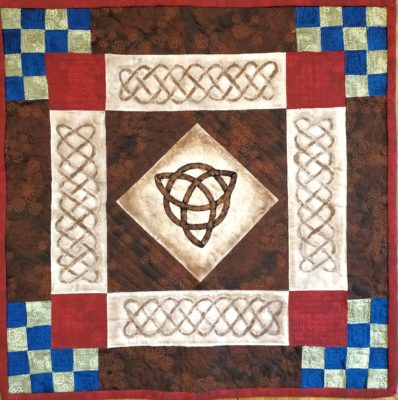 Celtic Theme Quilt Class: As part of our expanded tour this year, while in Dingle you may choose to enjoy making this project with one of Ireland’s favorite quilting personalities. the mill